Experimental high-energy nuclear physics with defining contributions to QCD matter under extreme conditions
Our group has made major contributions to the study of the phase diagram of Quantum Chromodynamics, the determination of the quark-hadron transition temperature, the search for the QCD critical point, the properties of quark-gluon plasma, the observation of the heaviest antimatter nuclei, spin-orbital angular momentum interactions in relativistic strongly interacting matter, evidence for re-scattering and collective effects in quark-gluon plasma, and state-of-the-art detector development for high-energy physics.
Our work combines experimental insight, strong grounding in heavy-ion theory, and scientific leadership in the STAR experiment at RHIC and the ALICE experiment at CERN.
Core Contributions
- Phase diagram of QCD and critical point studies
- Properties of quark-gluon plasma, including collectivity, jet quenching, and strangeness enhancement
- Observation of anti-alpha and anti-hypertriton
- First evidence for spin-orbital angular momentum interactions at LHC energies
- Evidence for re-scattering effects in the hadronic phase
- Rare-event searches, and detector R&D
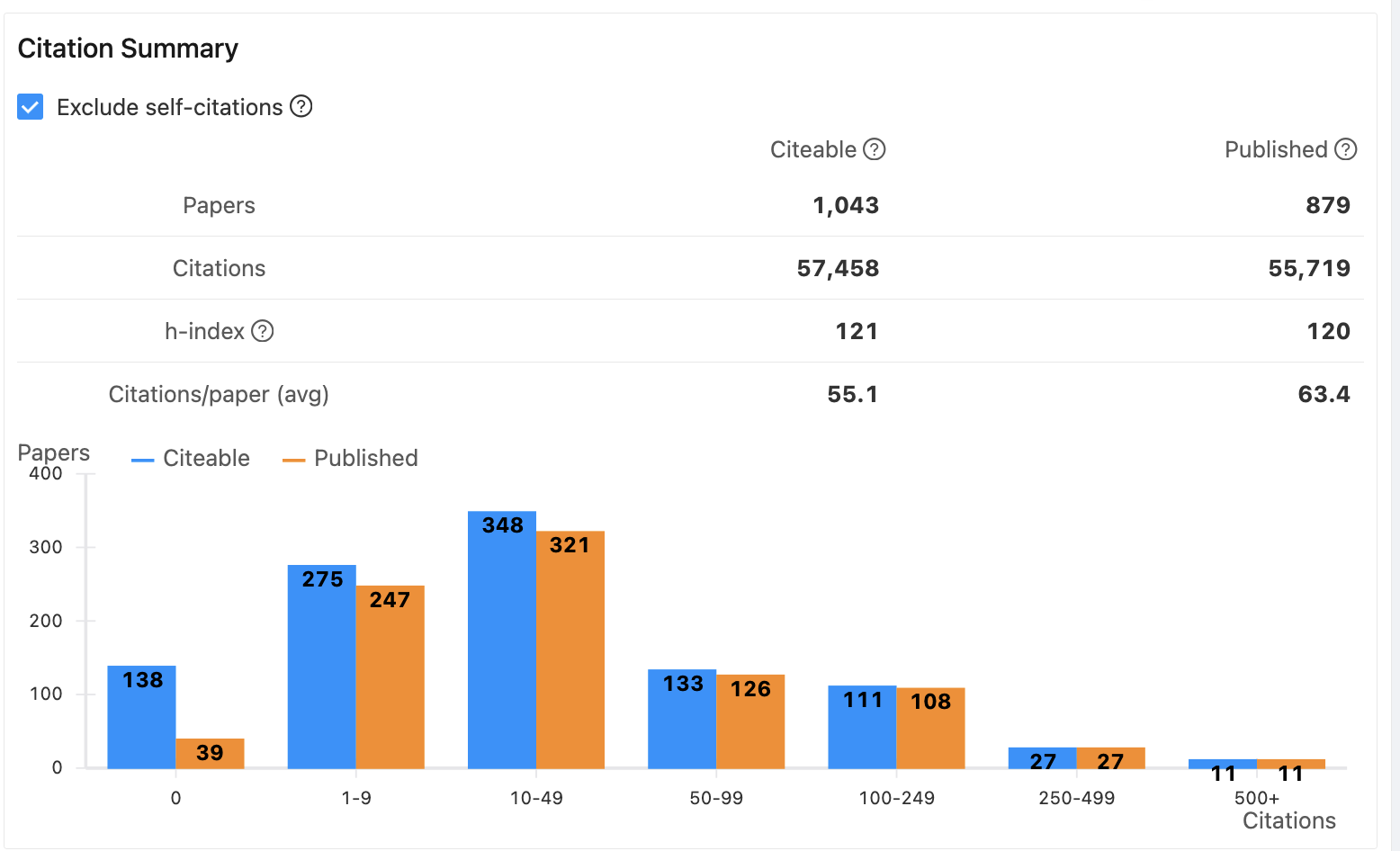
Citation Summary
Bibliometric summary from the INSPIRE record, shown here at the beginning of the page as an immediate overview of publication impact.
Overview
Our group has made significant contributions to experimental high-energy and nuclear physics. Our work addresses the phase diagram of Quantum Chromodynamics in high-energy nuclear collisions, establishes the temperature of the phase transition from quark-gluon plasma to hadronic matter, advances the study of quark-gluon plasma properties, contributes to the observation of the heaviest antimatter nuclei, provides evidence for spin-orbital angular momentum interactions in relativistic strongly interacting matter, and demonstrates re-scattering and collective effects in quark-gluon plasma.
Scientific reach
Our work spans relativistic heavy-ion collisions at SPS, RHIC and the LHC, antimatter and hypernuclei production, spin and vorticity observables, resonance dynamics, searches for lightly ionizing particles, DCC studies, and advanced detector development.
Style of contribution
Our research programme combines original ideas, experimental analysis, paper writing, leadership in large collaborations, and detector innovation. It is marked by a strong interplay between theory-aware physics design and high-impact experimental execution.
Main Research Areas
QCD phase diagram
Direct comparison of fluctuation observables with QCD calculations to determine the quark-hadron transition temperature and search for the critical point.
Quark-gluon plasma
Experimental studies of collectivity, viscosity, jet quenching, conductivity, diffusion, opacity, and strangeness enhancement in deconfined matter.
Antimatter nuclei
Observation of anti-alpha and anti-hypertriton and their implications for nuclear physics, cosmology, astrophysics, and space-based antimatter searches.
Spin and vorticity
Spin alignment of vector mesons as evidence for spin-orbital angular momentum interactions and the largest known vorticity in QCD matter.
Resonances and re-scattering
Use of K*0 and ϕ mesons to establish re-scattering and regeneration effects and probe the lifetime of the hadronic phase.
Rare events and detectors
Lightly ionizing particles, DCC-related photon studies, cryogenic detectors, and silicon detector development for the ALICE Forward Calorimeter.
Research Highlights
Determination of the Phase Diagram of QCD and Critical Point
A defining achievement of this programme is the creation of an experimental route for determining the QCD phase diagram using observables that can be directly compared with QCD calculations. This enabled the determination of the QCD quark-hadron transition temperature to be around 175 MeV and helped establish the Beam Energy Scan at RHIC as a major international scientific programme.
The collision-energy dependence of fluctuation observables, particularly net-baryon-number related measurements, has provided some of the most important experimental constraints on the existence and location of the QCD critical point. This programme also helped motivate theory coordination through BEST and lower-energy accelerator programmes such as FAIR and NICA.
Studies of Quark-Gluon Plasma and Its Properties
Our work has contributed to the experimental observation of the deconfined state of quarks and gluons and to the study of its properties, including viscosity, conductivity, diffusion coefficient, and opacity. This body of work established collectivity, jet quenching, and strangeness enhancement as central signatures of quark-gluon plasma.
Multi-strange hadrons were used to probe partonic collectivity and to extract the shear-viscosity-to-entropy-density ratio, showing that QGP behaves as a near-perfect fluid. our group also developed and deployed particle-identification techniques needed for high-momentum hadron studies and resolved the long-standing question of whether strangeness enhancement arises from QGP formation rather than canonical suppression in proton collisions.
Observation of Antimatter Nuclei in Heavy-Ion Collisions
The observation of anti-alpha in heavy-ion collisions provided a control baseline for anti-helium production relevant to space-based measurements such as AMS. The programme also contributed to the observation of the heaviest strange antimatter nucleus, the anti-hypertriton.
These results have important implications for nuclear physics, cosmology, and astrophysics. The TWAS résumé also highlights later ALICE work on the absorption of anti-helium-3 in nuclear matter and its effect on galactic propagation.
Evidence for Spin-Orbital Angular Momentum Interactions in QCD
Peripheral heavy-ion collisions generate enormous angular momentum. By measuring the spin alignment of neutral K* and ϕ vector mesons in non-central Pb-Pb collisions, our group showed evidence for spin-orbital angular momentum interactions in relativistic QCD matter for the first time at LHC energies.
These findings indicate the formation of a QGP fluid with the largest known vorticity. Our group came up with the idea for the ALICE study, was responsible for the analysis, wrote the paper, and presented the first results at an international conference.
Evidence for Re-scattering Effect in Quark-Gluon Plasma
The shorter lifetime of the K*0 resonance makes it a sensitive probe of the hadronic medium. Mohanty’s analysis showed that the ratio K*0/K− decreases with system size in heavy-ion collisions, while no corresponding suppression is seen in ϕ/K−, providing clear evidence for re-scattering effects at LHC energies.
This work was also used to estimate the lifetime of the hadronic phase. Measurements at higher transverse momentum showed suppression patterns that constrain particle-production mechanisms, fragmentation processes, and parton-energy-loss models in the QGP medium.
Search for Fractionally Charged Particles and DCC
Using SuperCDMS CDMSlite detectors, our group and collaborators explored and set limits over a broad charge, mass, and velocity parameter space for lightly ionizing particles. To carry out this search, a new Monte Carlo method was established within the GEANT framework.
Another long-standing direction is the search for Disoriented Chiral Condensates. Our group helped establish photon production measurements in heavy-ion collisions and developed the experimental framework for DCC studies, including extensive work on photon multiplicity detectors used in WA98, STAR, and ALICE.
Detector R&D for High-Energy and Rare-Event Experiments
Our group has contributed to state-of-the-art R&D on solid-state detectors for direct dark matter and rare-event searches and on silicon-based detector systems for parton-distribution studies in ALICE.
The novel cryogenic prototype detectors with world-leading sensitivity and his leadership of the Indian contribution to the ALICE Forward Calorimeter, including successful fabrication in India of high-resistivity silicon pad arrays and their validation in laboratory and CERN beam tests.
Top 20 Publications
Representative publications.
1–10
- Non-monotonic Energy Dependence of Net-Proton Number Fluctuations, Phys. Rev. Lett. 126 (2021) 092301.
- Bulk properties of the medium produced in relativistic heavy-ion collisions from the beam energy scan program, Phys. Rev. C 96 (2017) 044904.
- Beam Energy Dependence of Moments of the Net-Charge Multiplicity Distributions in Au-Au Collisions in RHIC, Phys. Rev. Lett. 113 (2014) 092301.
- Energy Dependence of Moments of Net-Proton Multiplicity Distributions at RHIC, Phys. Rev. Lett. 112 (2014) 032302.
- Scale for the Phase Diagram of Quantum Chromodynamics, Science 332 (2011) 1525.
- Higher Moments of Net Proton Multiplicity Distributions at RHIC, Phys. Rev. Lett. 105 (2010) 022302.
- Centrality and Transverse Momentum Dependence of Elliptic Flow of Multi-strange Hadrons and ϕ Meson in Au-Au Collisions, Phys. Rev. Lett. 116 (2016) 062301.
- Energy and system size dependence of ϕ meson production in Cu+Cu and Au+Au collisions, Phys. Lett. B 673 (2009) 183.
- Partonic flow and phi-meson production in Au+Au collisions, Phys. Rev. Lett. 99 (2007) 112301.
- Energy dependence of charged pions, protons and antiprotons transverse momentum spectra for Au+Au collisions, Phys. Lett. B 655 (2007) 104.
11–20
- Identified hadron spectra at large transverse momentum in p+p and d+Au collisions, Phys. Lett. B 637 (2006) 161.
- Evidence of Spin-Orbital Angular Momentum Interactions in Relativistic Heavy-Ion Collisions, Phys. Rev. Lett. 125 (2020) 012301.
- Evidence of re-scattering effect in Pb-Pb collisions at the LHC through production of K∗(892)0 and ϕ(1020) mesons, Phys. Lett. B 802 (2020) 135225.
- K∗(892)0 and ϕ(1020) meson production at high transverse momentum in pp and Pb-Pb collisions, Phys. Rev. C 95 (2017) 064606.
- K∗(892)0 and ϕ(1020) production in Pb-Pb collisions, Phys. Rev. C 91 (2015) 024609.
- Constraints on Lightly Ionizing Particles from CDMSlite, Phys. Rev. Lett. 127 (2021) 081802.
- Observation of the antimatter helium-4 nucleus, Nature 473 (2011) 353.
- Observation of an Antimatter Hypernucleus, Science 328 (2010) 58.
- Disoriented chiral condensate: Theory and experiment, Phys. Rept. 414 (2005) 263.
- Multiplicity and Pseudorapidity Distributions of Photons in Au-Au Collisions, Phys. Rev. Lett. 95 (2005) 062301.
Review papers
Disoriented chiral condensate: theory and experiment
Physics Reports (2005) A comprehensive review of the theoretical foundations and experimental searches for disoriented chiral condensates (DCC) in high-energy hadronic and heavy-ion collisions. It discusses mechanisms of DCC formation during the chiral phase transition, expected experimental signatures such as anomalous pion fluctuations, and summarizes results and prospects from SPS, RHIC, and future LHC experiments.
View INSPIRE recordLittle-Bang and Femto-Nova in Nucleus-Nucleus Collisions
AAPPS Bulletin 31 (2021) A concise review of the current understanding of hot and dense QCD matter in relativistic heavy-ion collisions, spanning the Beam Energy Scan program, critical point searches, and novel observables such as hypernuclei and global polarization. It introduces the complementary concepts of the high-temperature “Little Bang” (QGP formation) and the baryon-rich “Femto-Nova,” highlighting their roles in exploring the QCD phase diagram and future experimental prospects.
View INSPIRE recordSearch for the QCD critical point in high energy nuclear collisions
Progress in Particle and Nuclear Physics (2022) A comprehensive review of the current experimental efforts to locate the QCD critical point using fluctuation observables in heavy-ion collisions. It focuses on cumulants of conserved quantities (net-baryon, charge, strangeness), discusses experimental challenges and corrections, and interprets results from RHIC and other facilities in the context of theoretical predictions and future programs.
View INSPIRE recordCollective excitations in the hot QCD medium and the propagation of heavy quarks
Eur.Phys.J.A (2025) A detailed review of the theoretical and phenomenological understanding of collective excitations in the quark–gluon plasma and their impact on heavy-quark transport in relativistic heavy-ion collisions. It covers QGP modeling under realistic conditions (anisotropy, interactions, finite density), mechanisms of energy loss and gain, and connects these to experimental observables probing the medium’s dynamical properties.
View INSPIRE recordRare Event Searches Using Cryogenic Detectors via Direct Detection Methods
Modern Physics Letters A (2026) A concise review highlighting recent progress in understanding strongly interacting matter created in high-energy heavy-ion collisions, with emphasis on experimental signatures of QCD phase structure and collectivity. The article discusses key observables, current results, and future prospects toward locating the critical point and mapping the QCD phase diagram.
View INSPIRE recordResearch Links
© 2015. All rights reserved by Bedangadas Mohanty