Endowment Awards and Lectures
These endowments connect memory with mentorship. They celebrate outstanding student achievement and bring eminent scholars to our institutions, while honoring individuals whose lives were deeply rooted in learning, service, and commitment to education.
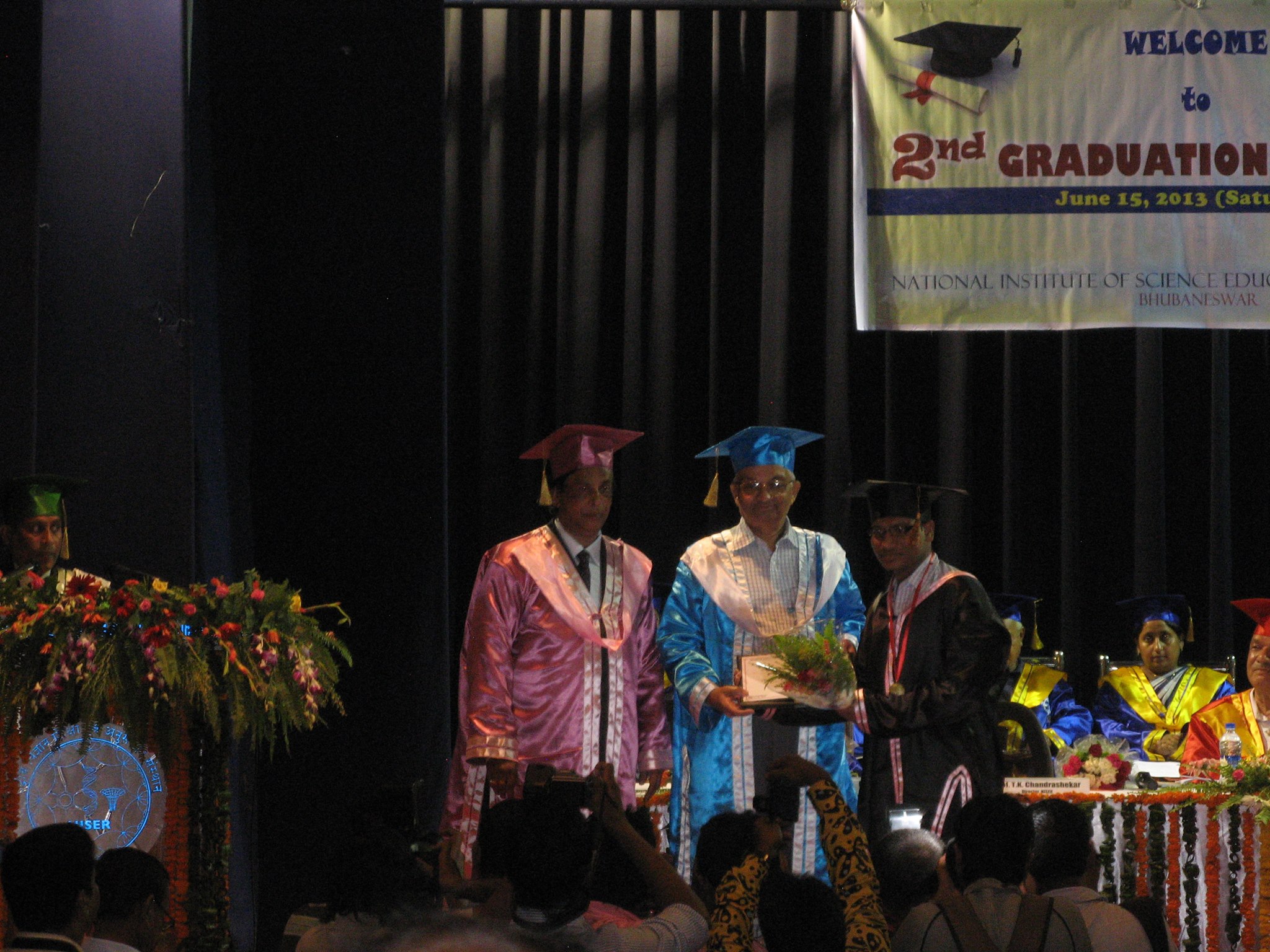
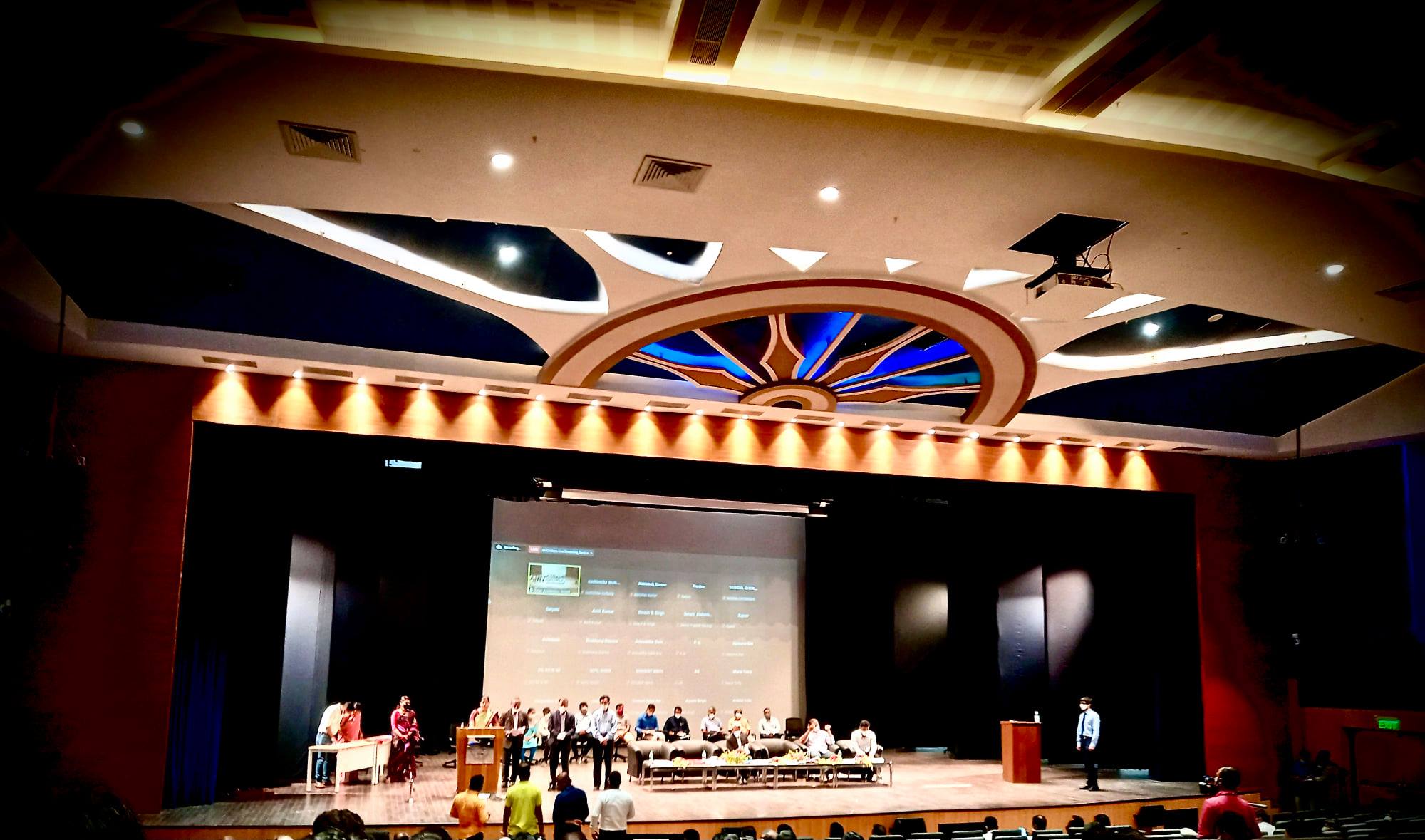
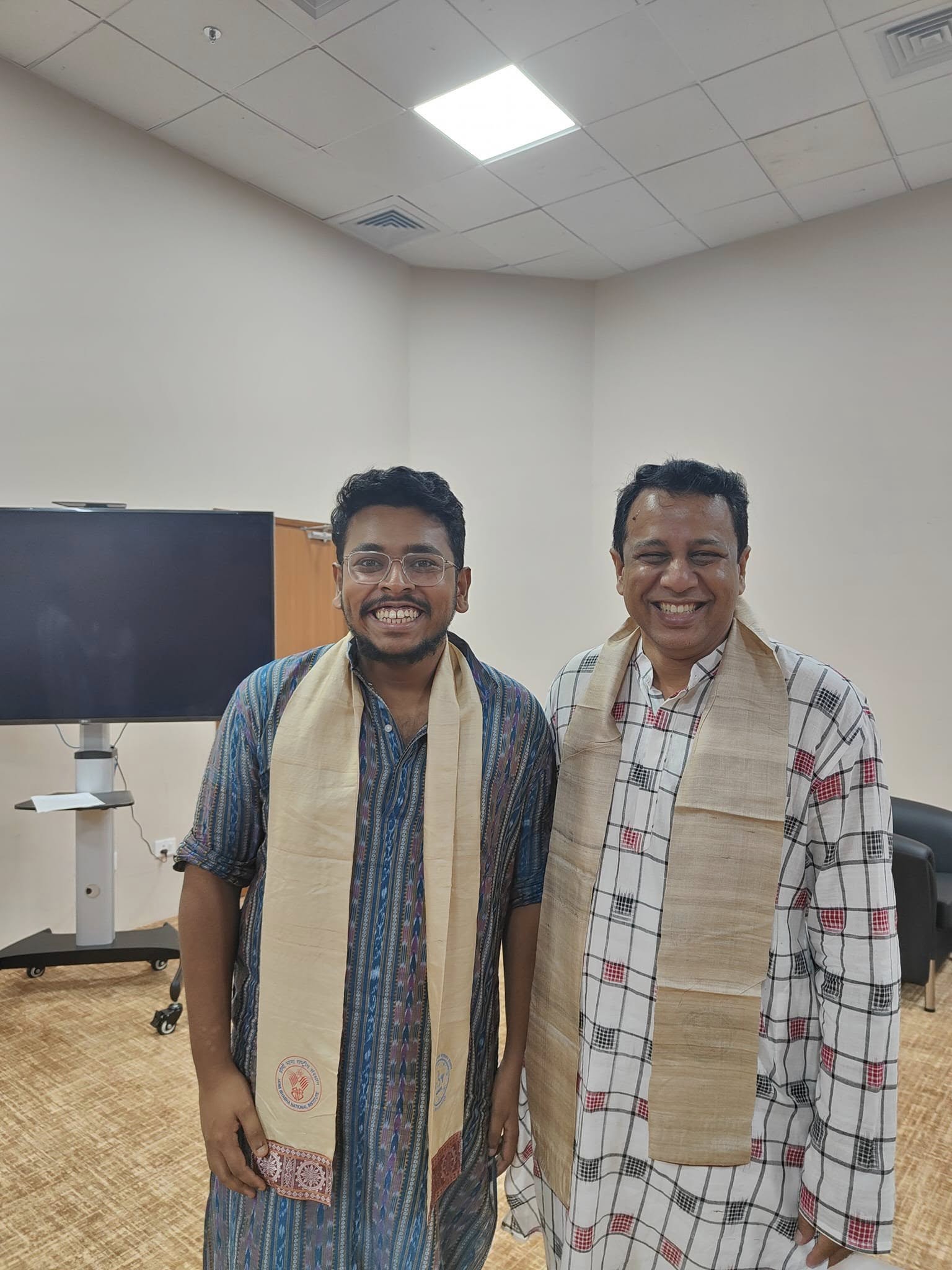
Prof. Tribikram Pati Memorial Gold Medal in Mathematics at NISER
This gold medal was instituted in honor of Prof. Tribikram Pati (1929–2008), a distinguished mathematician, poet, painter, and philosopher. He came from an extraordinary intellectual lineage: his father, Prof. Ratnakar Pati, was an eminent philosopher and Professor at Ravenshaw University, Cuttack, and his grandfather was Utkal Mani Gopabandhu Das, the eminent freedom fighter and social activist.
Prof. Pati was a brilliant scholar who stood first throughout his academic career, from school through M.A. in Mathematics at Allahabad University, for which he received the prestigious Empress Victoria Jubilee Award. He obtained his D.Phil. and D.Sc. in Mathematics from Allahabad University in 1953 and 1956 respectively. He went on to become founder and head of the Department of Mathematics and Statistics at Jabalpur University, later Professor and Head at Allahabad University, Dean of the Faculty of Sciences, Pro-Vice Chancellor, and finally Vice Chancellor of Allahabad University. He was also Vice Chancellor of Sanskrit University, Puri.
His influence as a teacher and institution builder was immense. Many of his students later became heads of mathematics departments at major universities including Utkal University, Sambalpur University, Berhampur University, Aligarh Muslim University, Delhi University, and Ujjain University. He served as President of the Odisha Bigyana Academy, President of the Odisha Mathematical Society, President of the Mathematical Section of the Indian Science Congress, and founding Chairman of the Institute of Mathematics and Applications, Bhubaneswar.
In research he made pioneering contributions to absolute summability, Fourier analysis, Dirichlet series, Norlund summability, re-summability, conjugate series, power series, Tauberian theorems, complex analysis, and spent fifteen years of his prime research life on the Riemann hypothesis. He received numerous honors including the Rajiv Gandhi National Unity Award, Sarala Award, Desh Ratna Award, Madhu Swabhiman Award, and the Cullis Memorial Lectureship of Calcutta University.
In honor of this life fully dedicated to intellectual pursuit, the Prof. Tribikram Pati Memorial Gold Medal is awarded to the undergraduate securing the highest CGPA in the Integrated M.Sc. Mathematics program at NISER.
Awardees
- 2013: First Prof. Tribikram Pati memorial award was given to the undergraduate student from NISER who did outstanding performance in mathematics. It went to Mr. Muna Naik.
- 2014: This year the award was given to Mr. Vishal Gupta who has secured a CGPA of 8.72 in Mathematics.
- 2021: Mr. Kumar Sannidhya Shukla received the Prof. Tribikram Pati Memorial Award for the best performance in Mathematics from the graduating batch.
- 2022: Prof. Tribikram Pati Memorial Award in Mathematics is conferred upon Mr. Archisman Bhattacharjee who has the Best Academic Performance in the Graduating Class from the School of Mathematical Sciences with CGPA of 9.04
- 2023: Apratim Choudhury received the Prof. Tribikram Pati Memorial Award for the best performance in Mathematics from the graduating batch.
- 2024: Mr. Ayanava Mandal from the School of Mathematical Sciences received the award for the highest academic performance in his graduating class, with an impressive CGPA of 9.51.
- 2025: Mr. Aarjav Jogani from the School of Mathematical Sciences has been awarded the Prof. Tribikram Pati Memorial Award in Mathematics for achieving the highest academic performance in his graduating class, with an impressive CGPA of 8.49.
Shri Durgadas Mohanty Memorial Gold Medal in Physics at IISER Berhampur
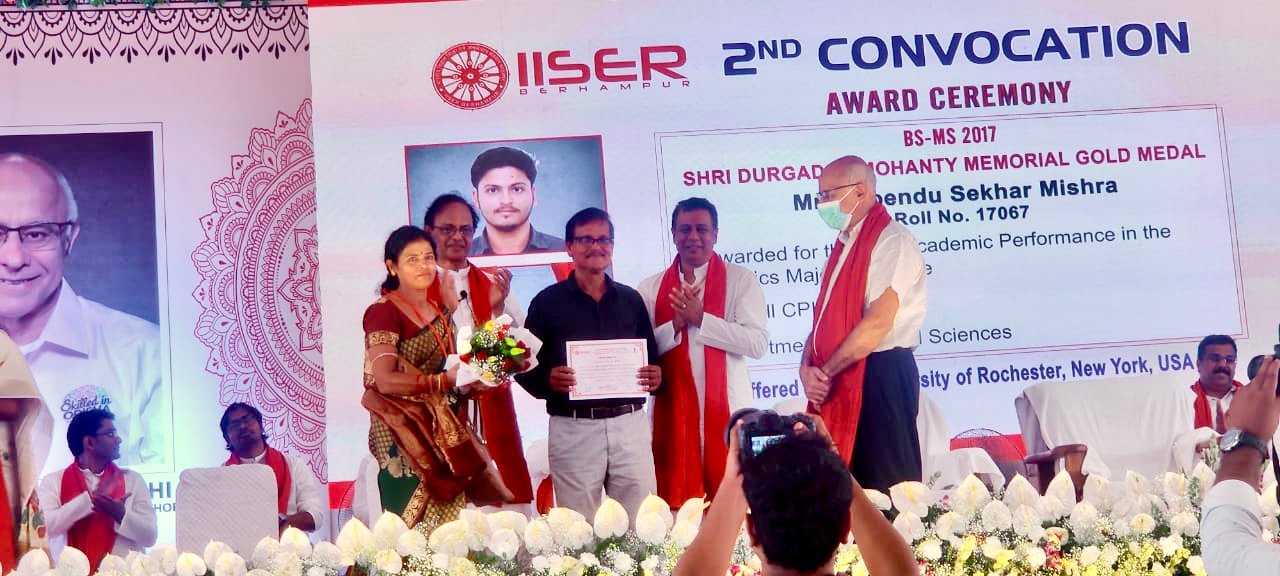
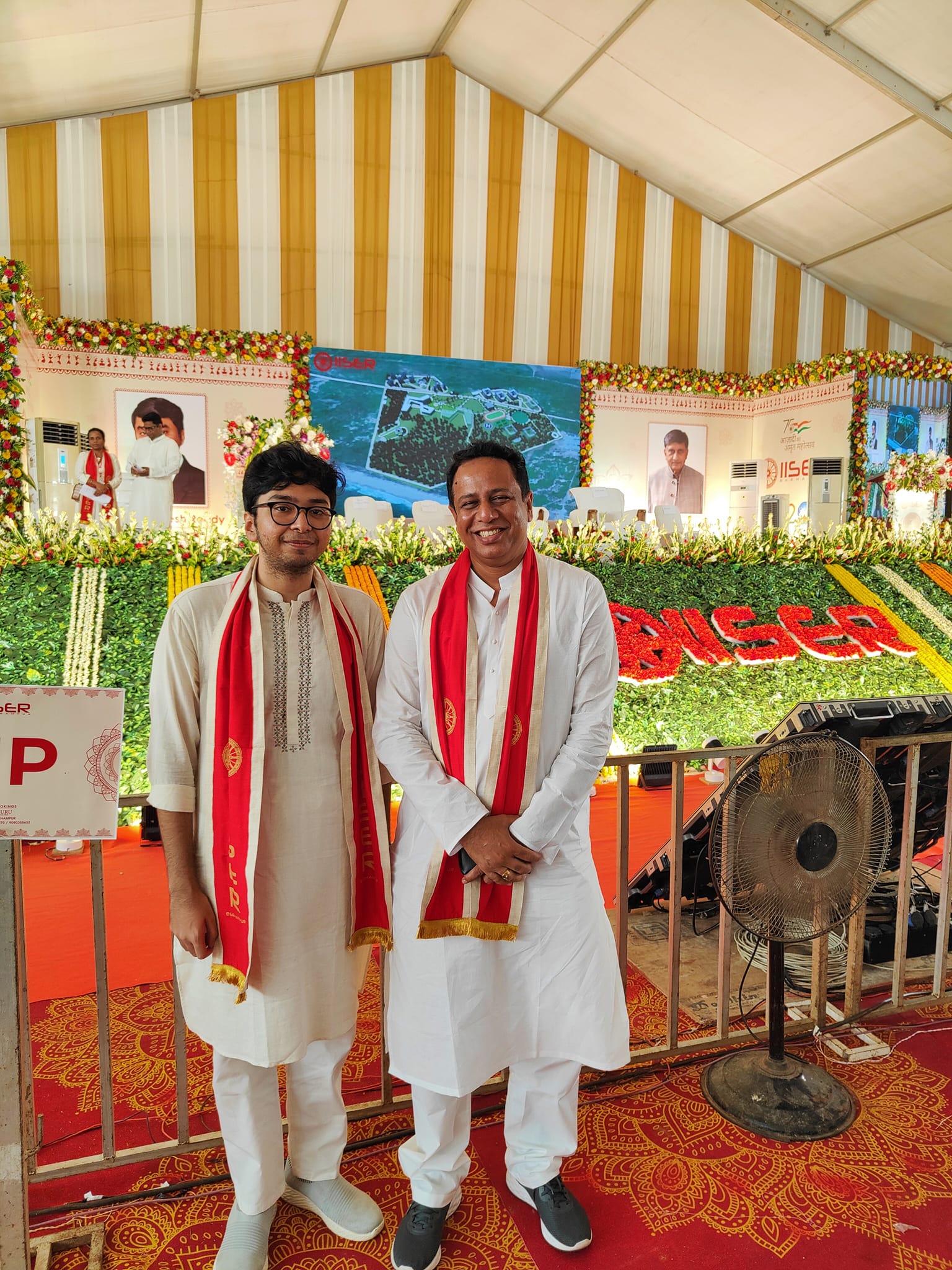
With the support of family members, I proposed the institution of a memorial medal in honor of my father, Shri Durgadas Mohanty, who always encouraged intellectual effort and academic pursuit. The medal is awarded every year to the undergraduate securing the highest CPI in the Physical Sciences major of the BS-MS Dual Degree Programme at IISER Berhampur.
The purpose of the award is to recognize excellence in physics at the undergraduate level and to encourage young students to pursue advanced study and research in the subject. Over the years, the medal has come to mark a significant academic milestone for some of the best-performing students in physical sciences at IISER Berhampur.
Awardees
- 2022: Shri Durgadas Mohanty Memorial Gold Medal for topper in Physics went to Nabendu Sekhar Mishra. He was on his way to join the University of Rochester, USA, and the medal was received by his parents.
- 2023: Mr. Chitrak Bhowmik, a graduating master’s student at IISER Berhampur, received the Durgadas Mohanty Memorial Award for his performance in physical sciences. He went on to join Brandeis University to work in soft matter physics.
- 2024: Mr. Harsh Mishra from the Physics Department received both the President’s Gold Medal and the Durgadas Mohanty Memorial Award. He received Ph.D. offers from the University of Chicago, the University of Cambridge, and Cornell University, and chose to join the Quantum Science and Engineering Ph.D. program at the University of Chicago.
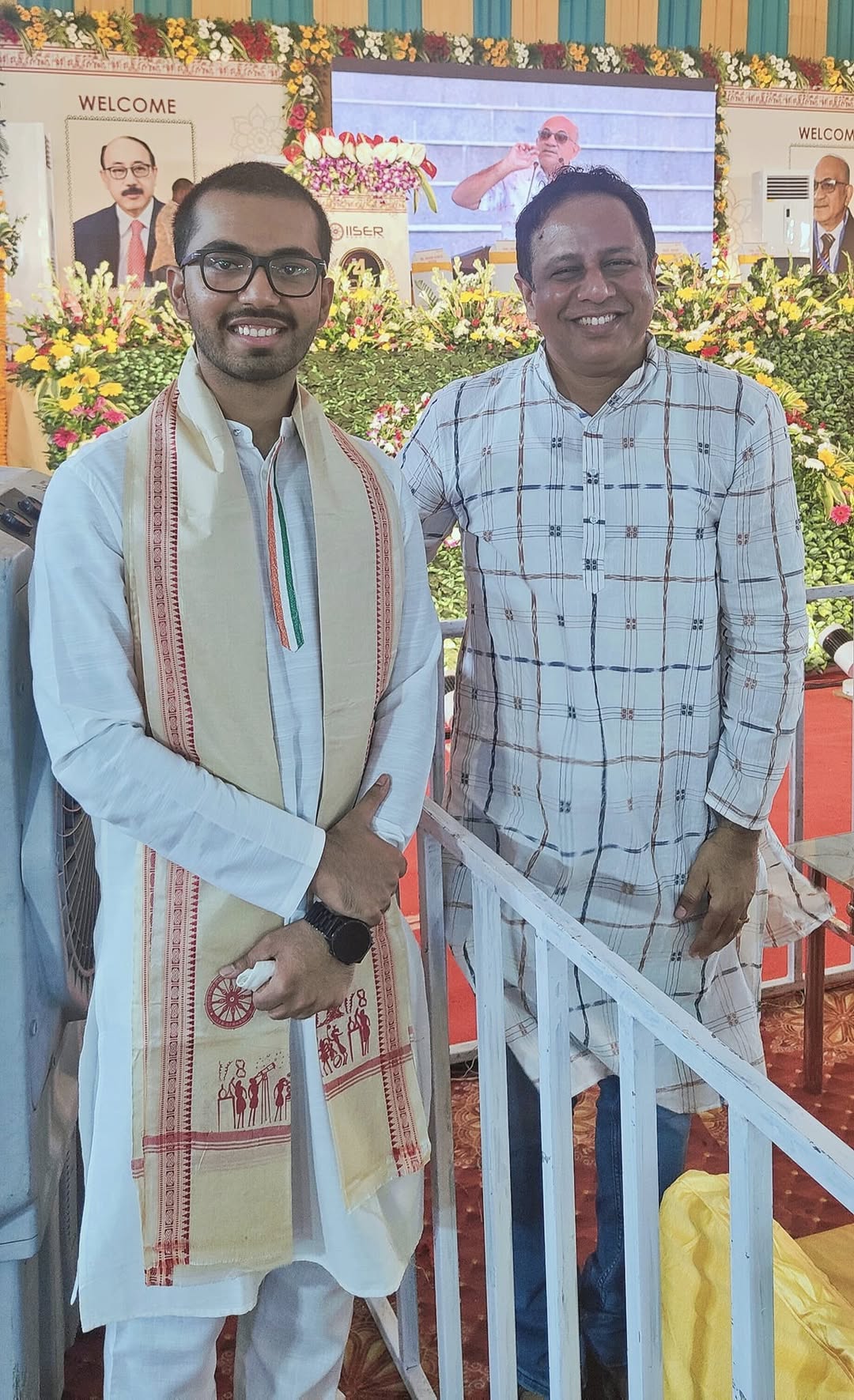
- 2025: Mr. Laishram Librada Singh received the Shri Durgadas Mohanty Memorial Gold Medal — the fifth student to be honored with this award. He will join the Division of X-ray Photon Science, Department of Physics and Astronomy, Uppsala University, as a Ph.D. student.

P. K. Parija Lecture in Life Sciences
The P. K. Parija Lectures in Life Sciences were established through an endowment fund received at NISER from a trust. The lectures honor Prana Krushna Parija OBE (1 April 1891 – 2 June 1978), a renowned botanist, academician, and institution builder from Odisha.
Born at Balikuda in Jagatsinghpur district, Odisha, P. K. Parija served as Principal of Ravenshaw College, Pro Vice-Chancellor of Banaras Hindu University, and Vice-Chancellor of Utkal University. The Parija Library of Utkal University is named after him. He also worked extensively for agricultural development in Odisha and was an elected member of the Odisha Legislative Assembly. Among his honors were the Fearnsides Scholarship at Trinity College, Cambridge, the Officer of the Order of the British Empire (OBE) in the 1944 New Year Honours, and the Padma Bhushan in 1955.
A committee consisting of the Director, NISER, Director, IISER Berhampur, the Chairperson of the School of Biological Sciences, and Prof. Bedangadas Mohanty decides on inviting an eminent scientist in life sciences for these lectures. The invited speaker delivers two colloquium-level talks — one at NISER and one at IISER Berhampur — and one technical talk at NISER. The endowment supports part of the travel, stay in Bhubaneswar, and an honorarium as a token of appreciation.
Lecture Series
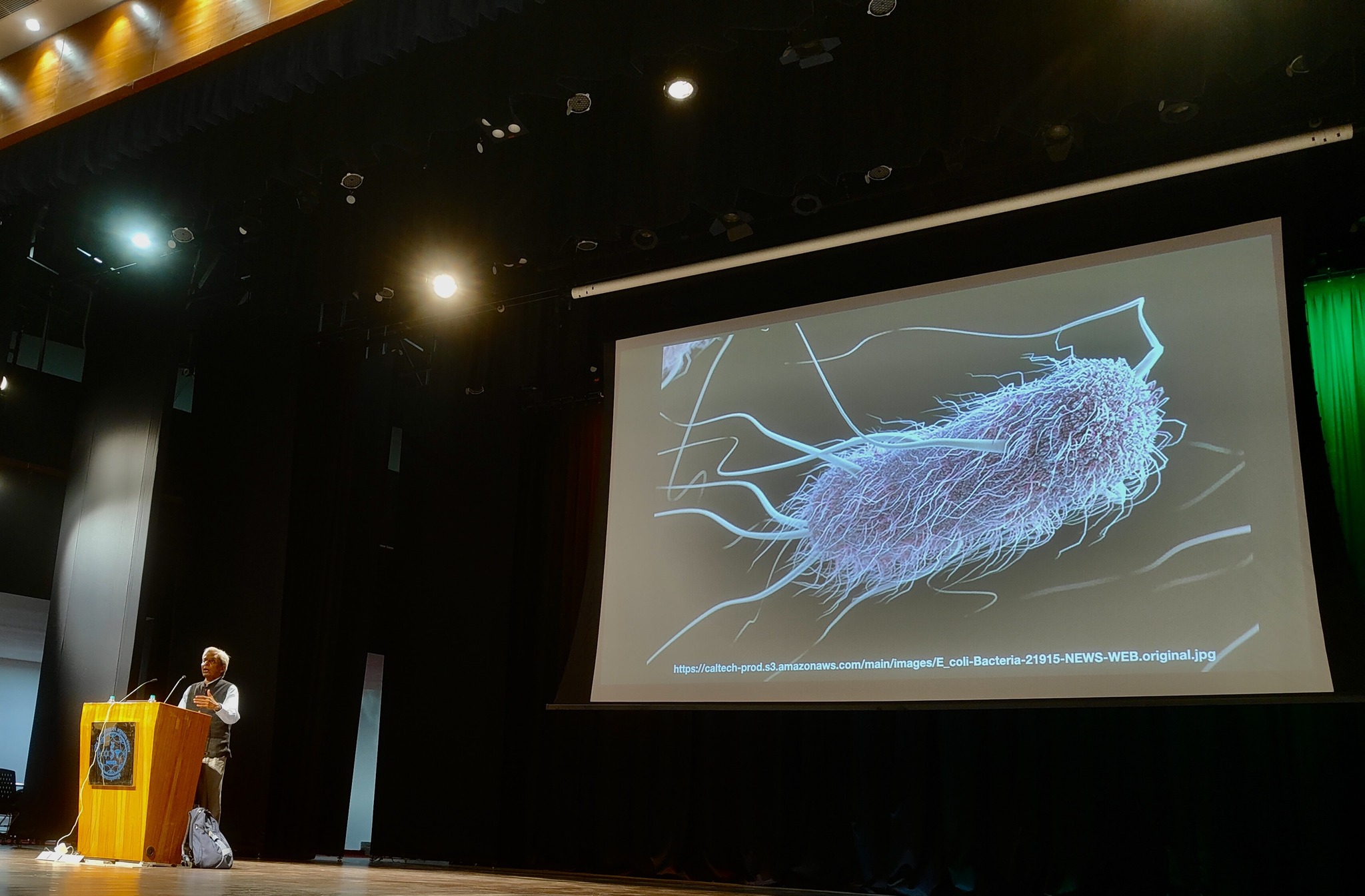
- 2023: First P. K. Parija Lecture delivered at NISER by Prof. K. VijayRaghavan.
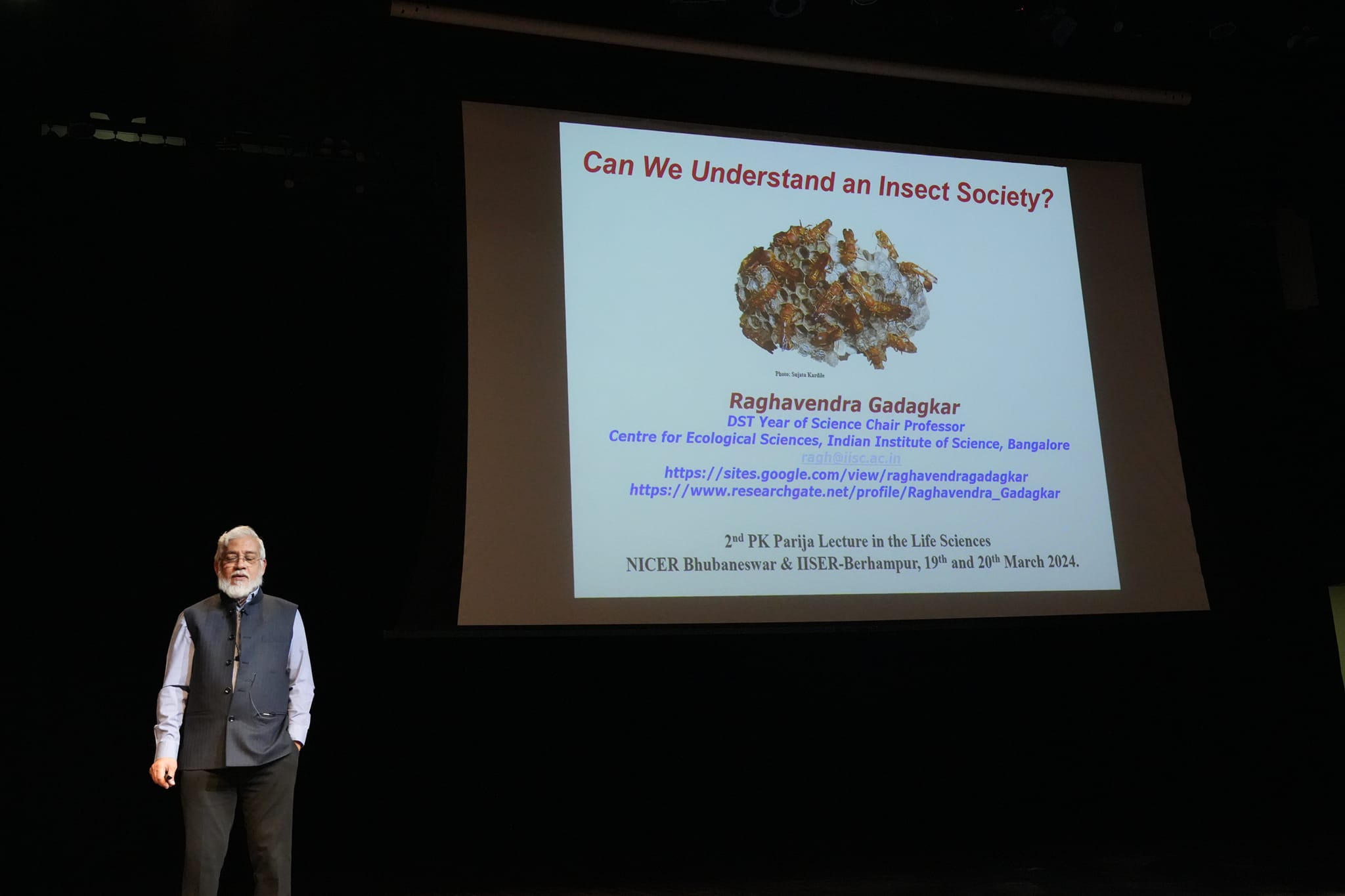
- 2024: Second P. K. Parija Lecture delivered at NISER by Prof. Raghavendra Gadagkar.
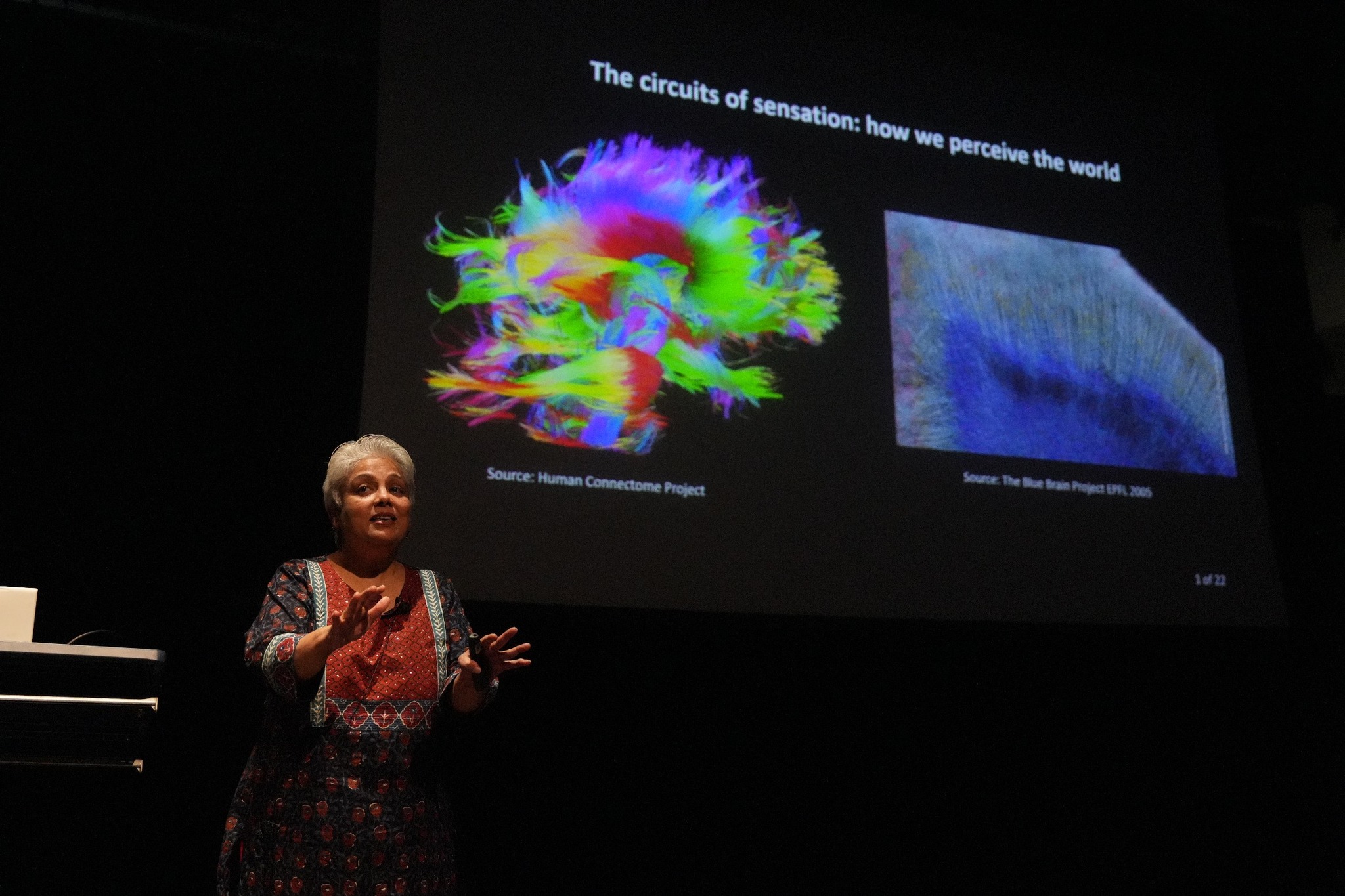
- 2025: Third P. K. Parija Lecture delivered at NISER by Prof. Shubha Tole.
- 2026: Fourth P. K. Parija Lecture in Life Sciences delivered by Prof. R. A. Badwe.