Projects & Funding
Research grants and collaborative projects supporting work on exoplanets, astrochemistry, planet formation, and the origin of life in the Universe.
1. Multifaceted Search for Extra-terrestrial Intelligence
Research grant awarded by the SETI Institute through the Breakthrough Prize Foundation,
amounting to Rs. 26,02,868 per annum, starting from July 2025. Future disbursements are
subject to the availability of funding in subsequent years.
2. Measurement of Dust Growth in Protoplanetary Disks: Understanding the Origins of Planet Formation
SERB Mathematical Research Impact Centric Support (SERB–MATRICS) research grant of
Rs. 2,00,000/- p.a. and overheads of Rs. 20,000/- p.a. for 3 years (2022–2025).
3. The Formation and Evolution of Complex Organic Molecules in Extraterrestrial Environments
Exploring the role of molecular astrophysics in the origin of life, supported by a
SERB Start-up Research Grant (SERB–SRG) of Rs. 2,17,0344/- for 2 years (2021–2023).
4. Tracing the Ingredients for a Habitable Earth from Interstellar Space through Planet Formation
Exoplanets, star and planet formation. Selected for a Ramanujan Grant of
Rs. 1,35,000/- per month (including HRA), research grant of Rs. 7,00,000/- p.a., and
overheads of Rs. 60,000/- p.a. for 5 years (2020–2025).
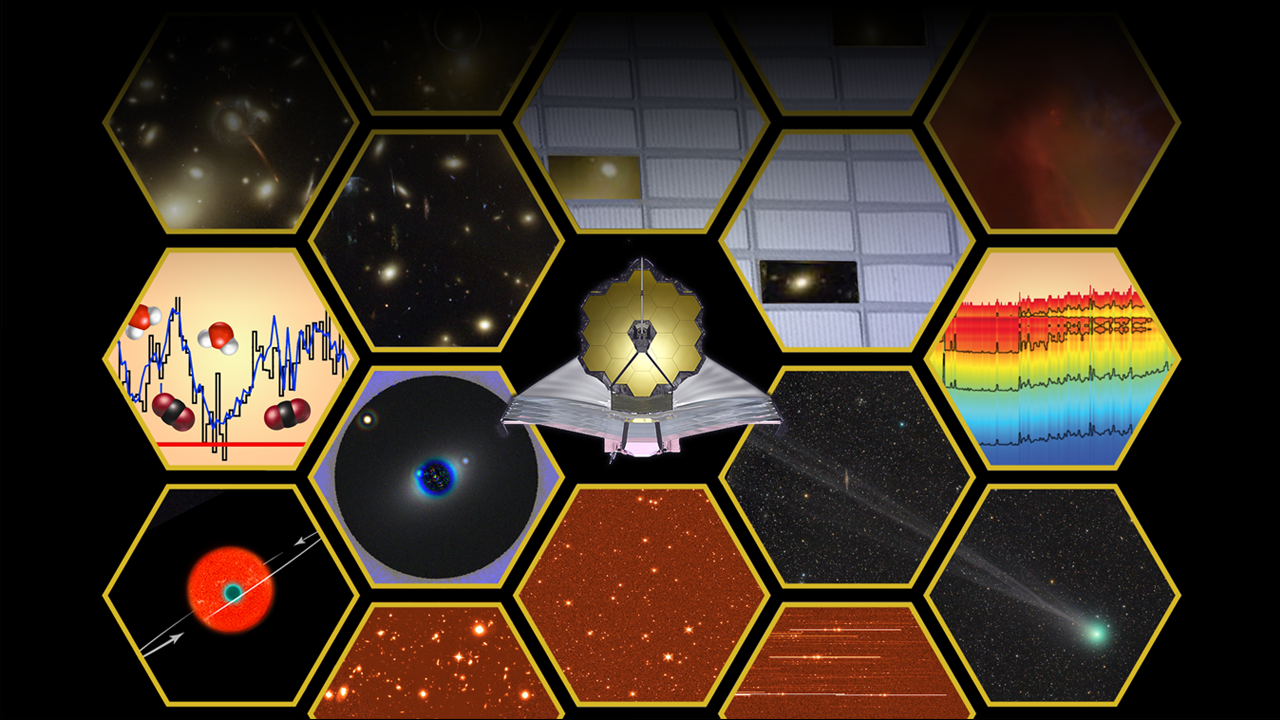
5. JWST Guaranteed Time Observation (GTO) Program Co-Investigator
Co-investigator of the
Guaranteed Time Observation (GTO) program
of NASA's James Webb Space Telescope (JWST) to study the physics and chemistry of
protostellar binaries in the Perseus molecular cloud.

6. Chemistry in Disks (CID) Project Member
Member of the
Chemistry in Disks (CID)
project, an international consortium involving the Max Planck Institute for Astronomy
(Heidelberg, Germany), Laboratoire d'astrophysique de Bordeaux (France), IRAM (Grenoble, France),
SETI Institute (USA), Institute of Astronomy and Astrophysics (Taiwan), Jena Observatory (Germany),
University of Virginia (USA), and Konkoly Observatory (Hungary).
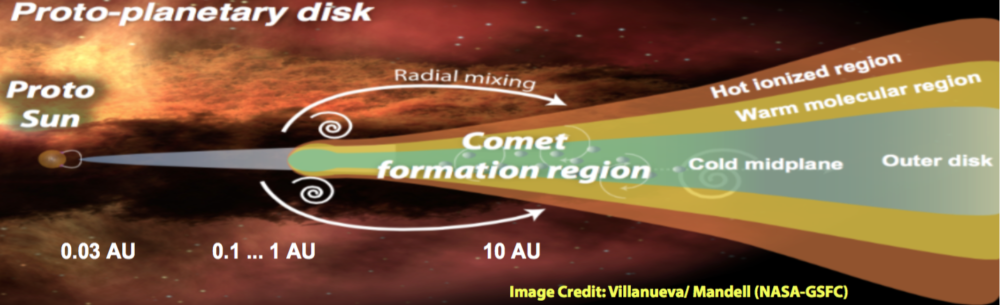
7. ISSI Project: From Qualitative to Quantitative Comet–Disk Links
Member of the
“Qualitative to Quantitative: Exploring the Early Solar System by Connecting Comet Composition
and Protoplanetary Disk Models”
project at the International Space Science Institute (ISSI), Bern. Collaborators span
University of Bern (Switzerland); American University, University of Missouri–St. Louis,
Catholic University of America, NASA JPL, and NASA Goddard Center for Astrobiology (USA);
IPAG Grenoble and Université d'Orléans (France); Leiden University and University of Groningen
(Netherlands); and Queen's University Belfast (UK).

8. Square Kilometre Array (SKA) Science & SKA India Consortium
Regular member of the Square Kilometre Array Indian Consortium (SKAIC), NCRA–TIFR, Pune, and
Associate
of the SKA “Cradle of Life” International Science Working Group (SWG). These activities provide
input to the SKA Observatory on design, commissioning, and operations to address fundamental
questions such as: (i) What accounts for the diversity of planetary systems? (ii) Are terrestrial
planets common in the habitable zone? (iii) Do gas giants form in the inner disk or migrate inward?
(iv) What are the implications for Earth-like planets?