Research
Our research is broadly concerned with nonequilibrium statistical physics—the study of systems that continuously exchange energy, information, or momentum with their surroundings and therefore cannot be described by equilibrium thermodynamics. By combining analytical theory, kinetic equations, stochastic processes, and large-scale numerical simulations, we seek universal principles governing collective behaviour, transport, and dynamical phase transitions across interacting many-body systems.
Irreversibility and Asymmetric Interactions
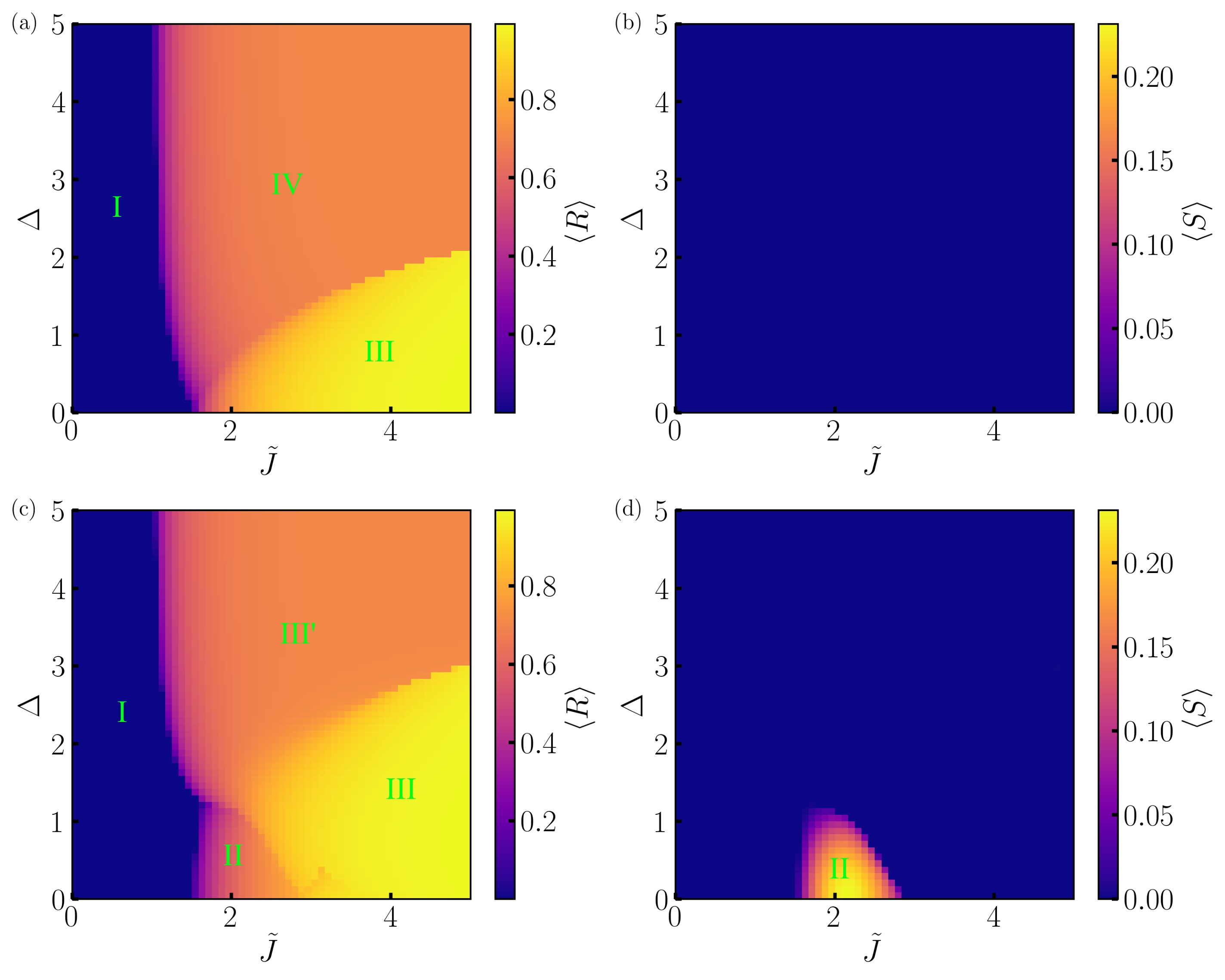
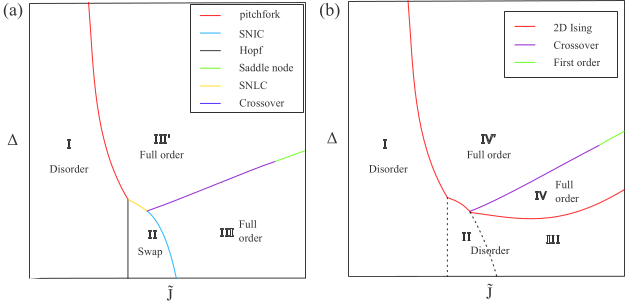
One of the fundamental assumptions of equilibrium physics is that interactions are reciprocal: if one constituent influences another, the response is equal and opposite. Many biological, ecological, and driven physical systems violate this symmetry. Such nonreciprocal interactions introduce microscopic irreversibility and generate collective phenomena that cannot emerge within conventional equilibrium statistical mechanics.
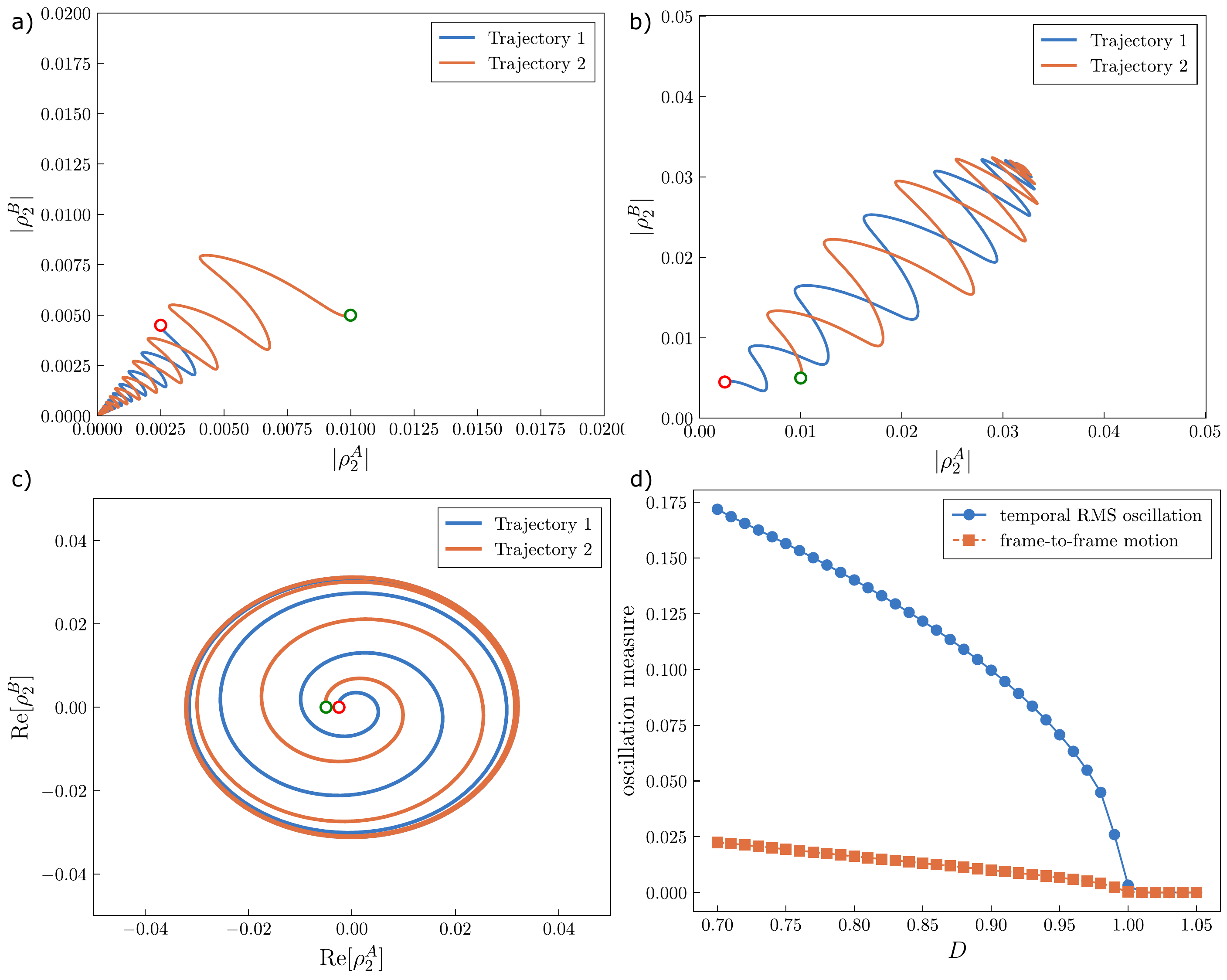
Our research develops theoretical models that explore how asymmetric interactions modify phase transitions, critical behaviour, and pattern formation in both lattice and continuum systems. We investigate nonreciprocal Ising and Blume–Capel models, dynamic cluster mean-field theory, and continuum McKean–Vlasov equations to understand travelling states, irreversible ordering, and emergent collective dynamics.
Current research directions
- Nonreciprocal Ising and Blume–Capel models
- Irreversible critical phenomena
- Travelling waves in continuum systems
- Transport in nonreciprocal systems
Collective Dynamics of Active Matter
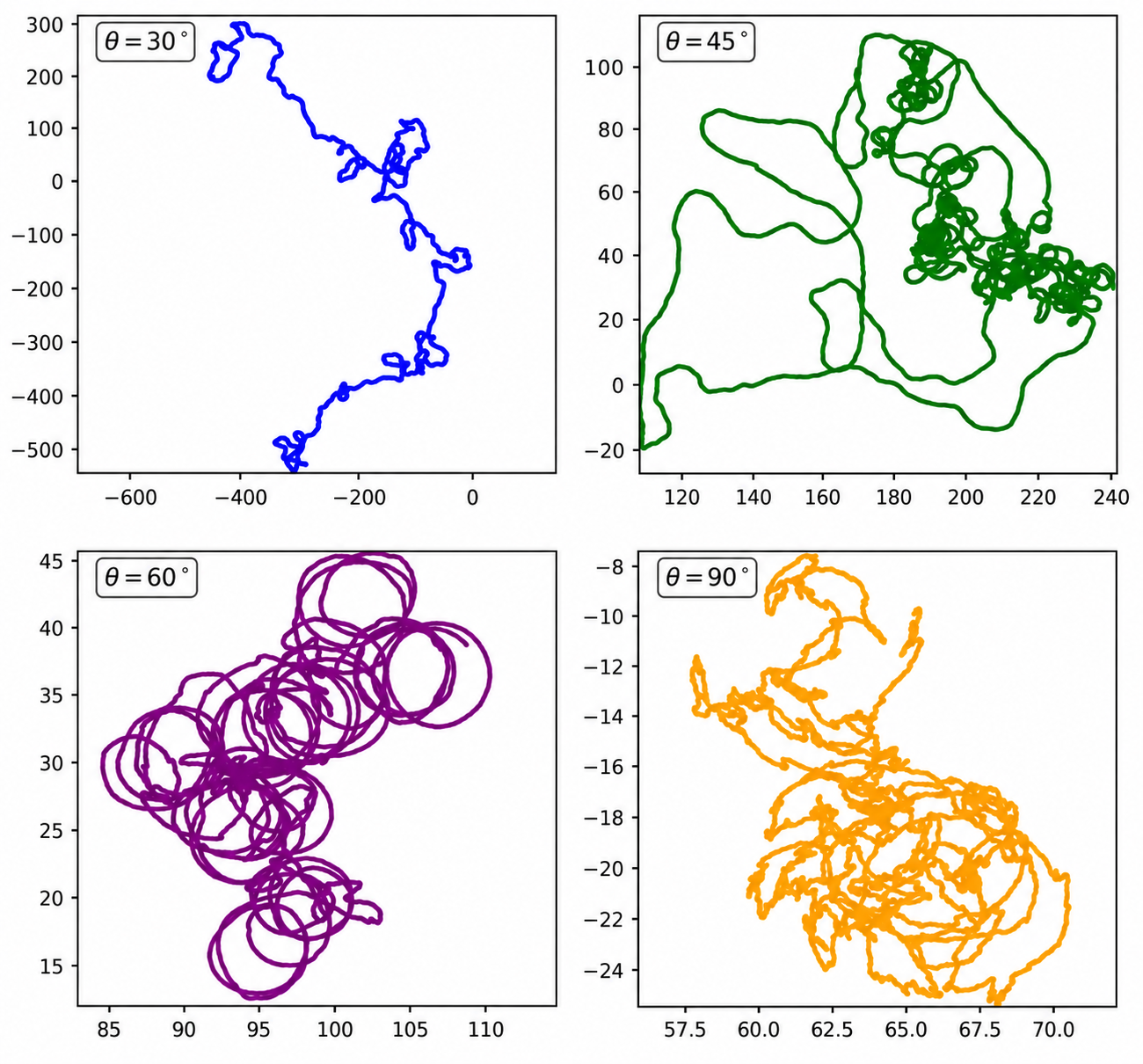
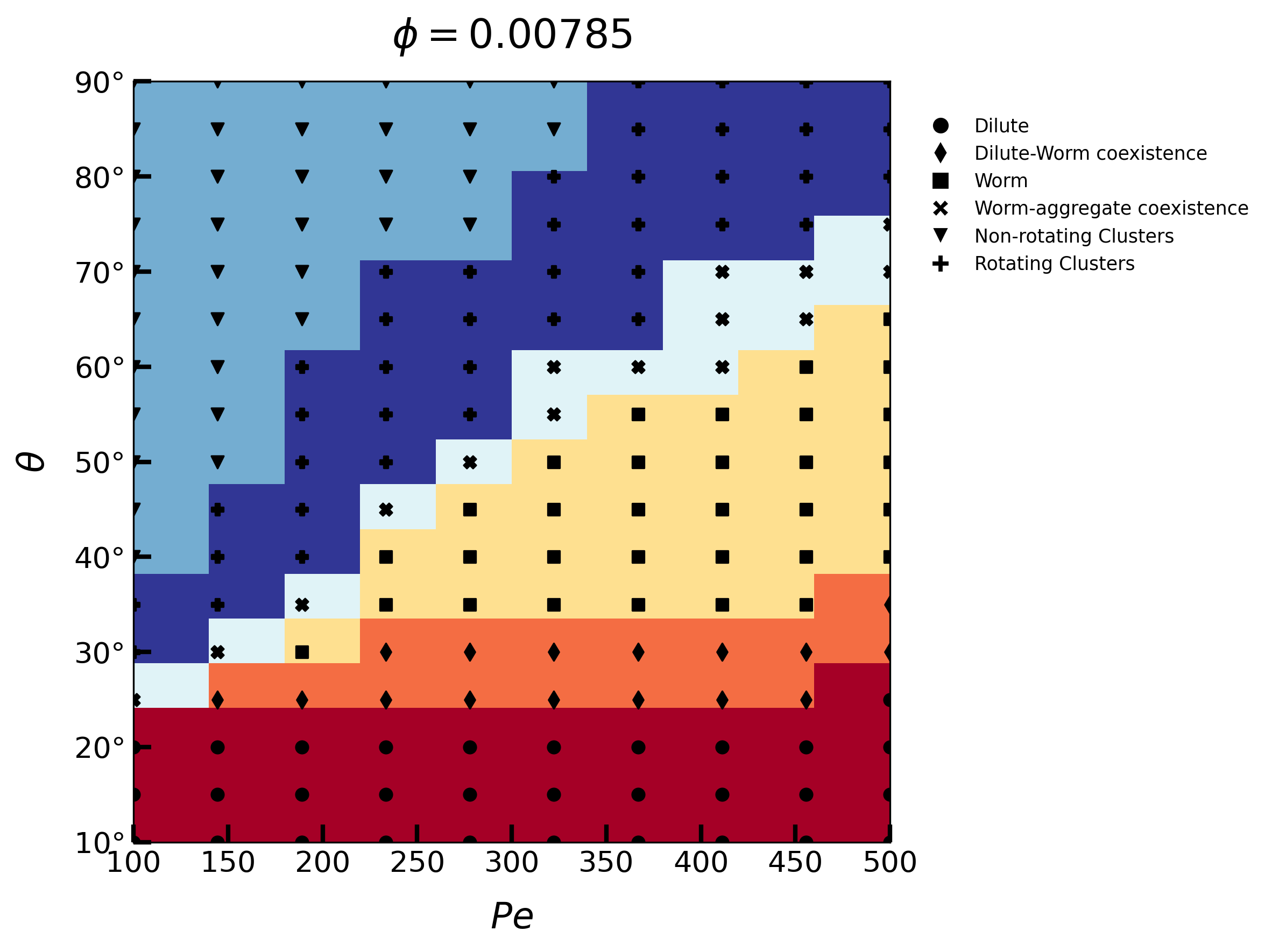
Active matter consists of self-propelled particles that continuously consume energy to generate motion. Unlike passive materials, these systems spontaneously organize into clusters, vortices, and dynamically evolving structures through purely local interactions. Understanding how simple interaction rules produce such rich collective behaviour is one of the central challenges of nonequilibrium physics.
Our work focuses on the role of sensing, communication, and confinement in active systems. We investigate rotating clusters arising from visual perception, quorum-sensing induced phase separation in colloidal mixtures, and confined transport where persistence and channel geometry jointly control transport efficiency. These studies aim to identify universal mechanisms underlying self-organization in synthetic and biological active materials.
Current research directions
- Active Brownian particles
- Rotating clusters and collective rotation
- Quorum sensing and adaptive motility
- Confinement and active transport
Theory of Nonequilibrium Phase Transitions
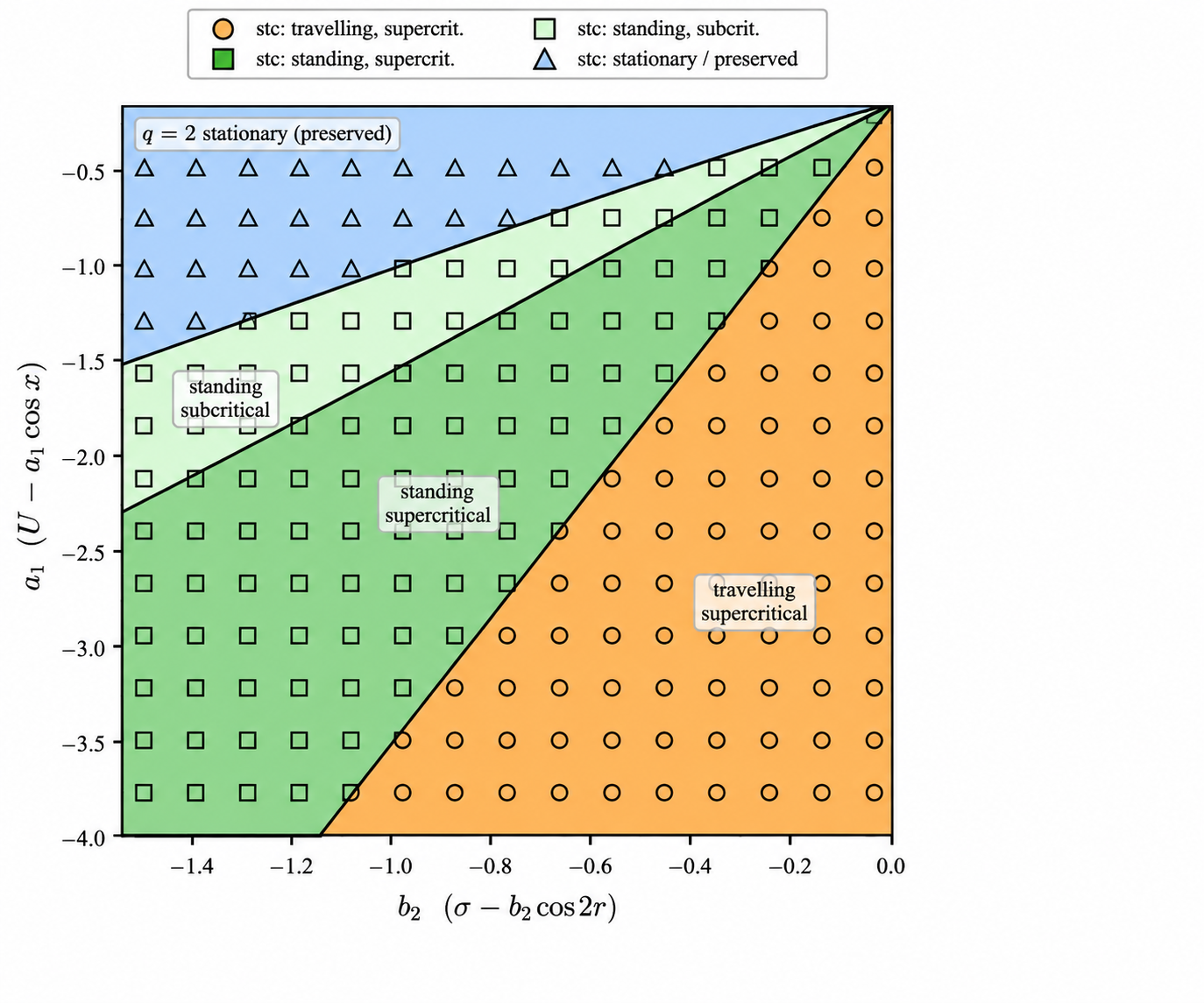
Many driven systems undergo transitions between dynamically distinct states despite remaining far from thermodynamic equilibrium. These nonequilibrium phase transitions often involve irreversible symmetry breaking, temporal ordering, and the spontaneous emergence of spatial patterns that cannot be understood using equilibrium free-energy arguments.
Our research develops theoretical frameworks that connect microscopic interaction rules with macroscopic collective behaviour. By combining kinetic equations, stability analysis, finite-size scaling, and continuum descriptions, we investigate universal aspects of irreversible phase transitions across lattice models, active matter, and interacting stochastic systems.
Methodological themes
- Kinetic and continuum theories
- Linear and nonlinear stability analysis
- Monte Carlo simulations
Stochastic Transport and First-Passage Dynamics
Transport, switching, and decision-making in nonequilibrium systems are frequently governed by rare stochastic events rather than deterministic trajectories. First-passage processes therefore provide a unifying framework for problems ranging from intracellular gene regulation to cargo transport in active particle systems.
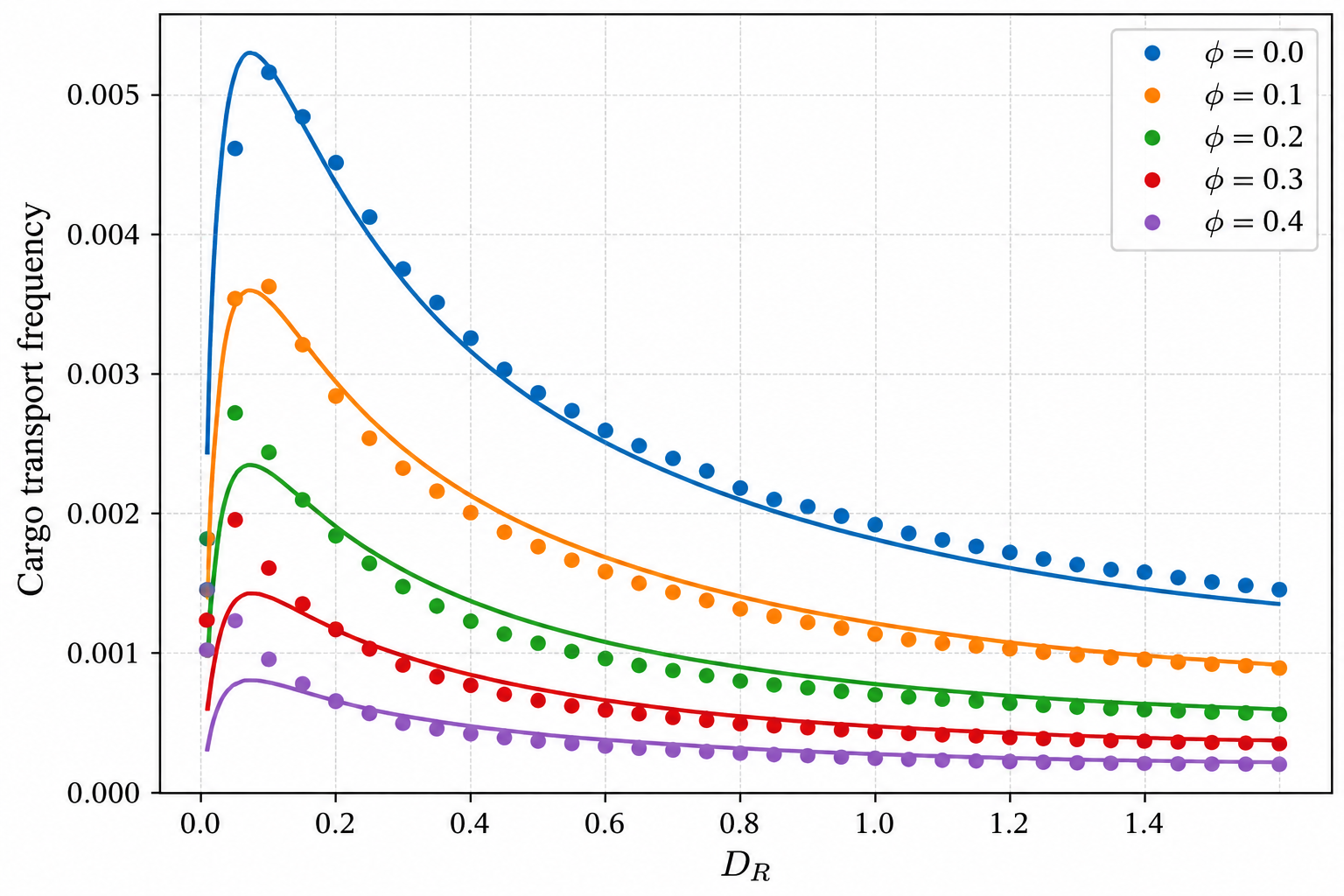
We combine Langevin dynamics, master equations, delay differential equations, and exact Gillespie simulations to understand how noise, memory, and confinement shape dynamical behaviour. Our recent work includes delay-induced stochastic switching in negatively autoregulated gene networks and coarse-grained birth–death descriptions of cargo transport by active Brownian particles in confined channels, revealing universal scaling laws connecting microscopic dynamics with transport efficiency.
Current research directions
- Delay-induced stochastic switching
- First-passage theory
- Gillespie and Langevin simulations
- Birth–death models of transport
Theoretical and Computational Methods
Our research integrates analytical physics with computational modelling. Rather than treating theory and simulation as separate approaches, we use each to guide and validate the other, allowing microscopic mechanisms to be tested quantitatively across multiple length and time scales.